

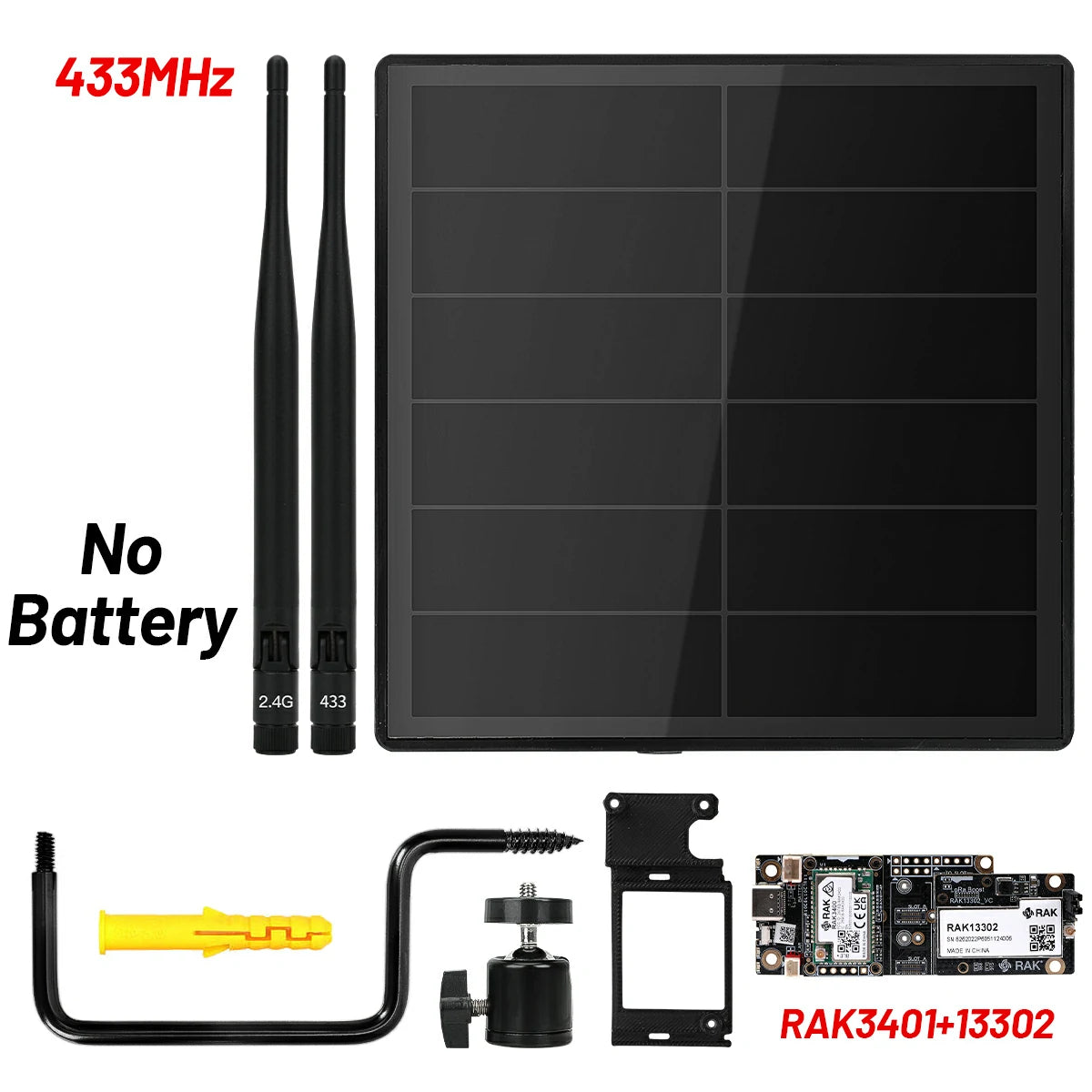
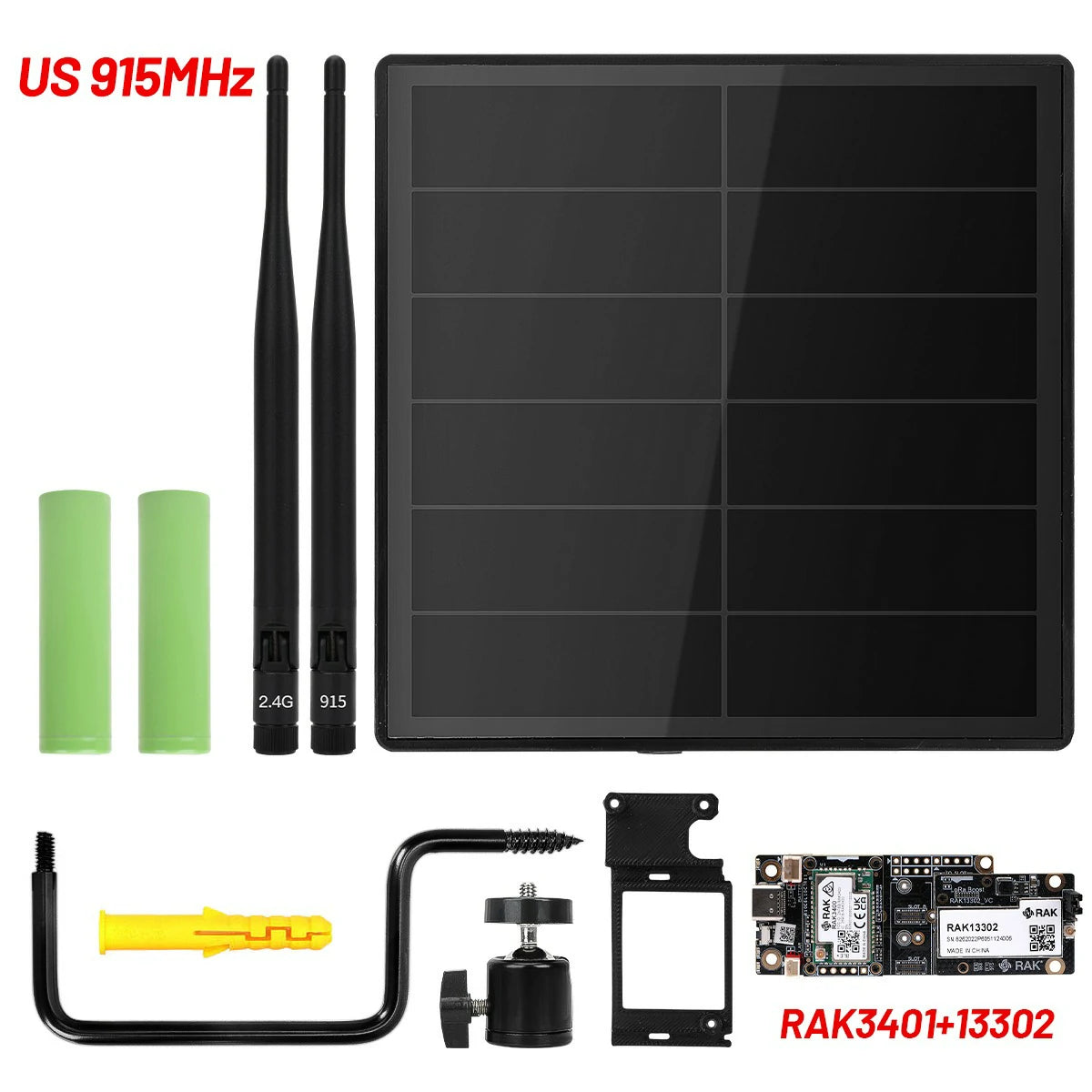
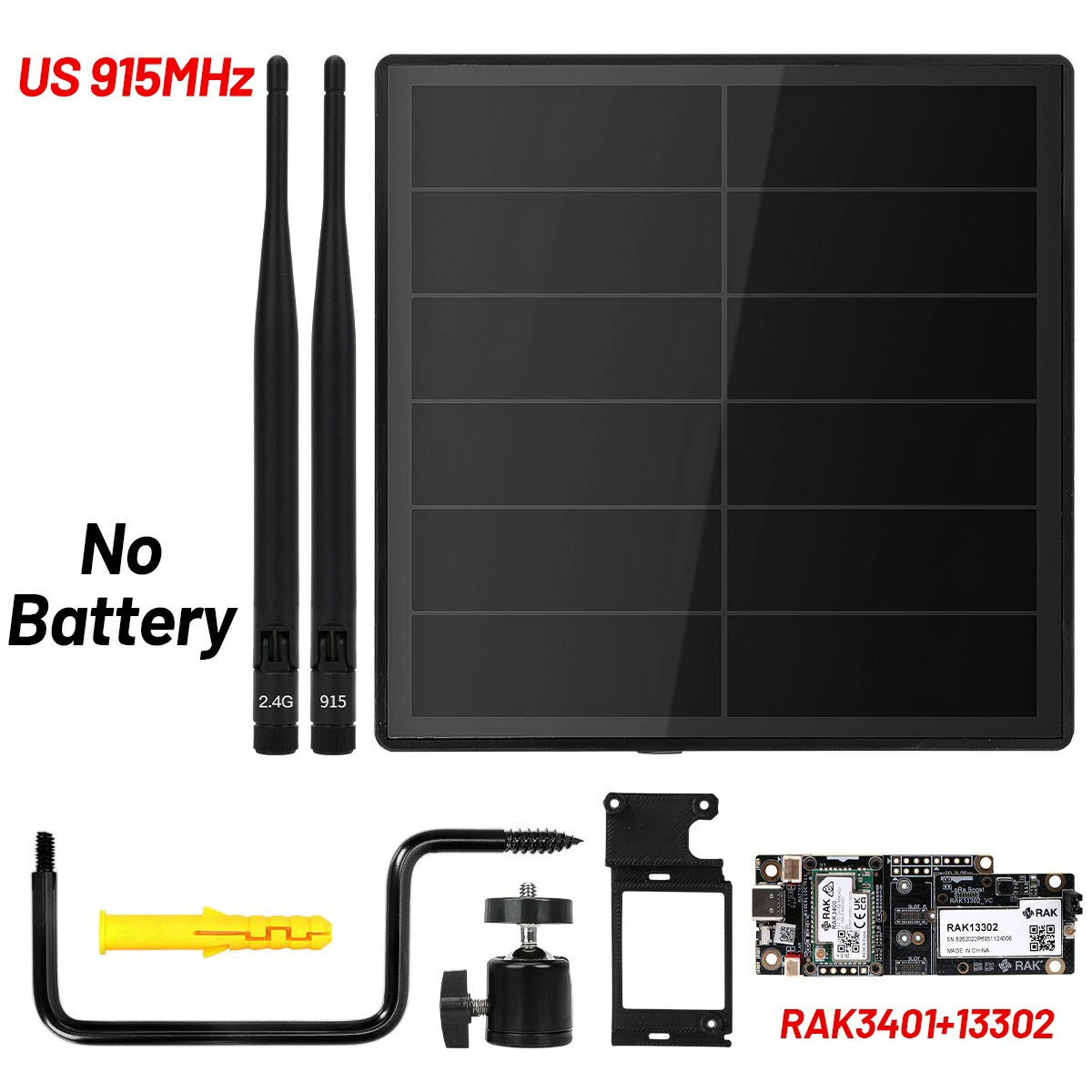
D5L-R3 Solar Mesh Repeater Node Wisblock LoRa Modules 915MHz
- Regular price
- $119.90
- Sale price
- $119.90
- Regular price
-
Couldn't load pickup availability
Share
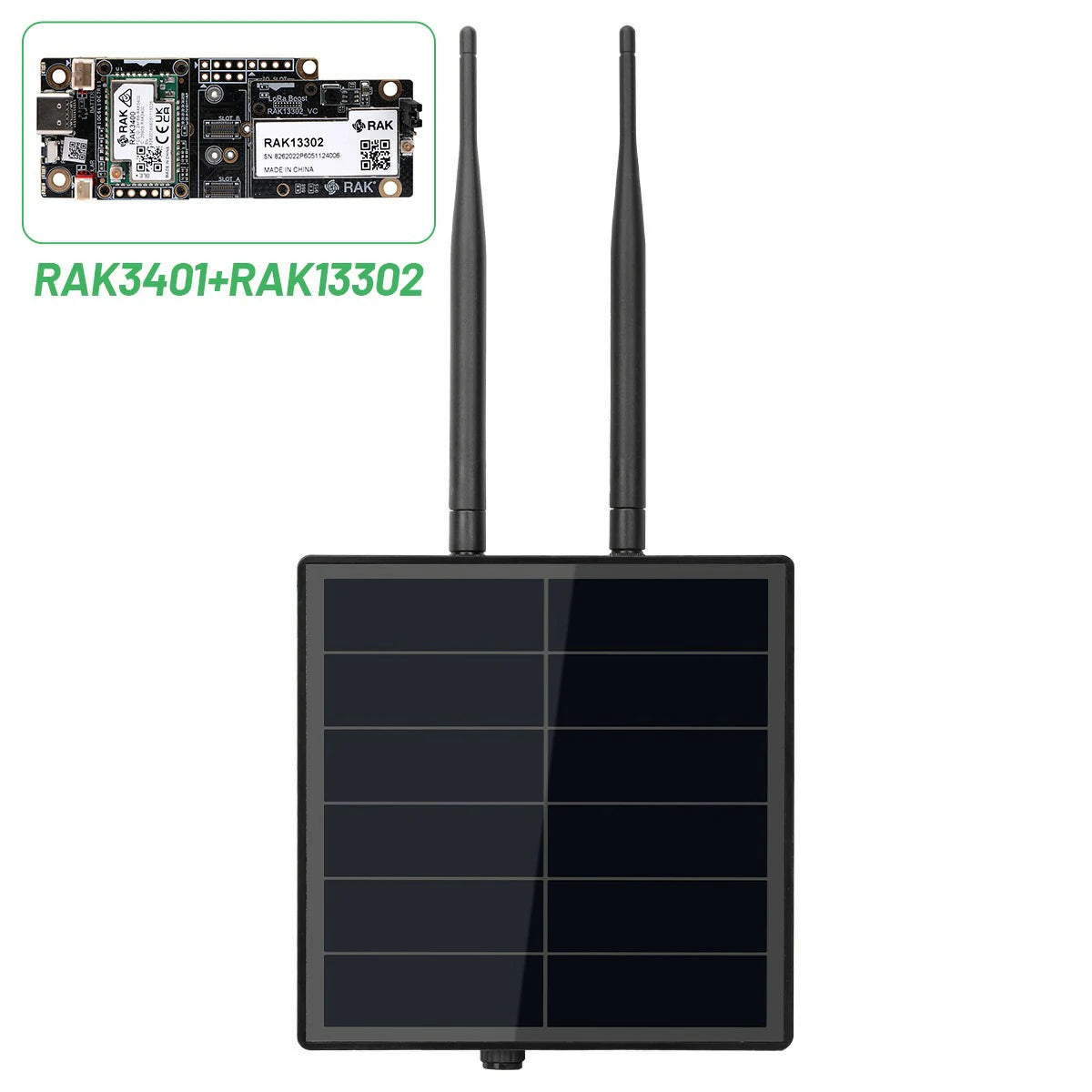
D5L-R3 High Power Solar Mesh Repeater
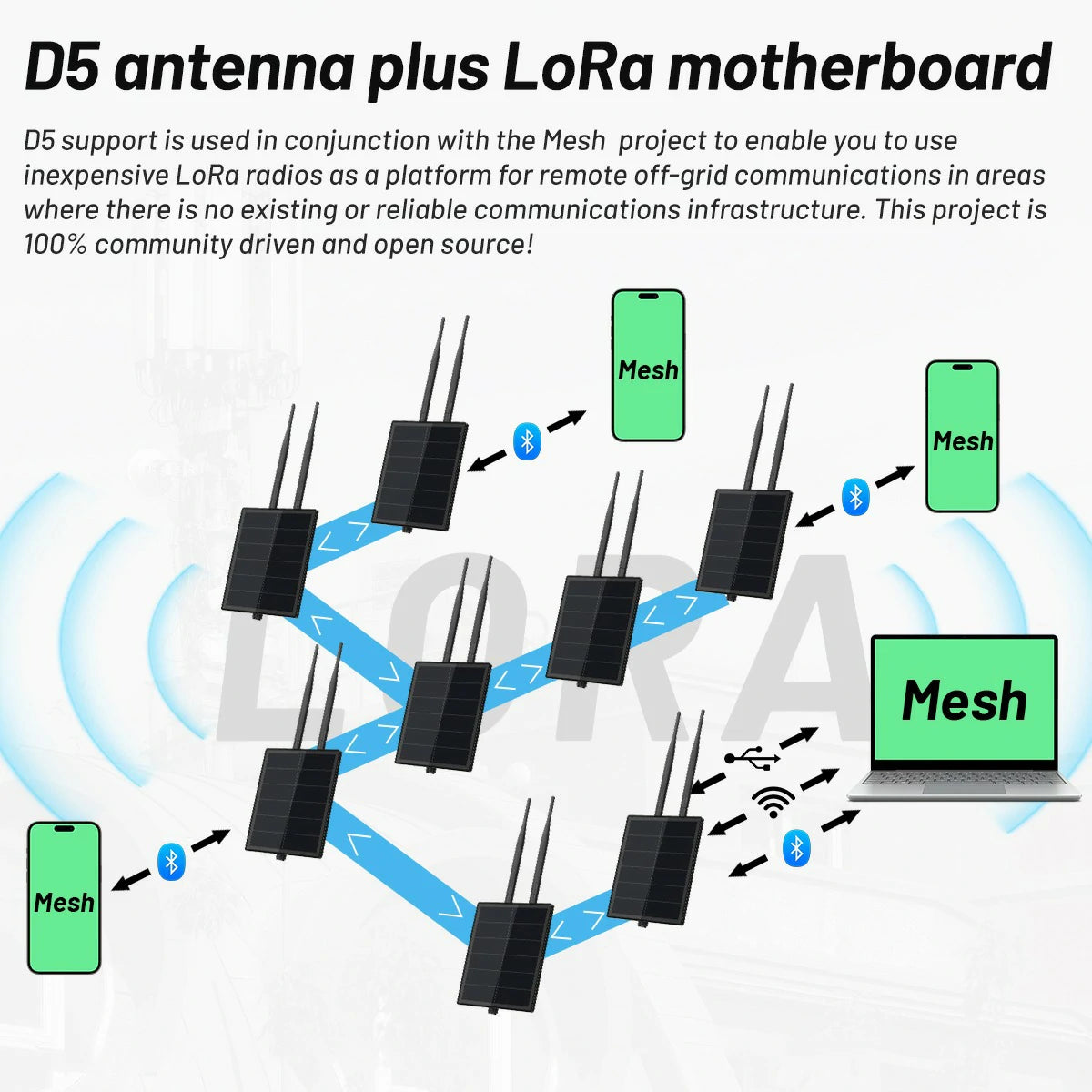
Compatible Meshtastic&Meshcore
Description:
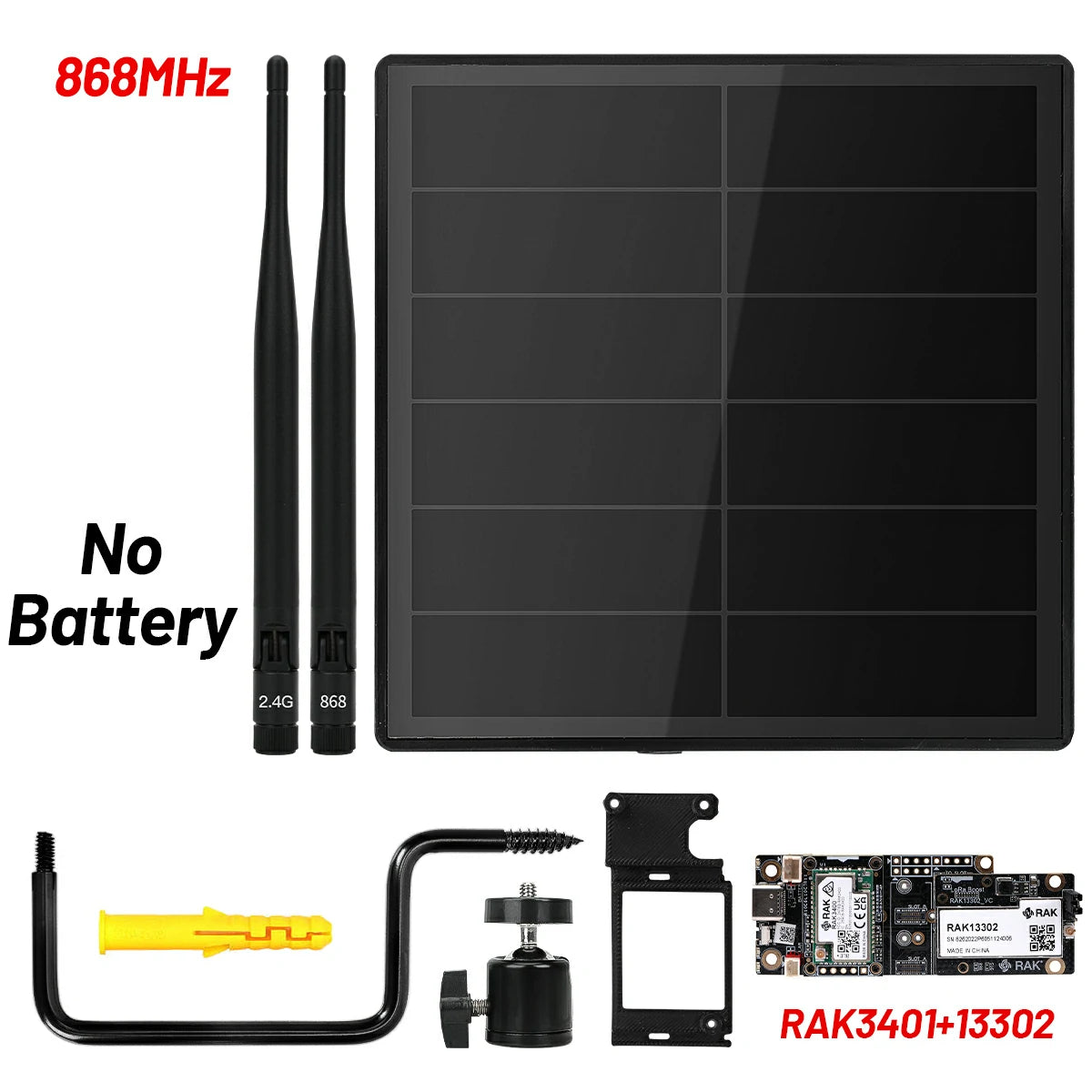
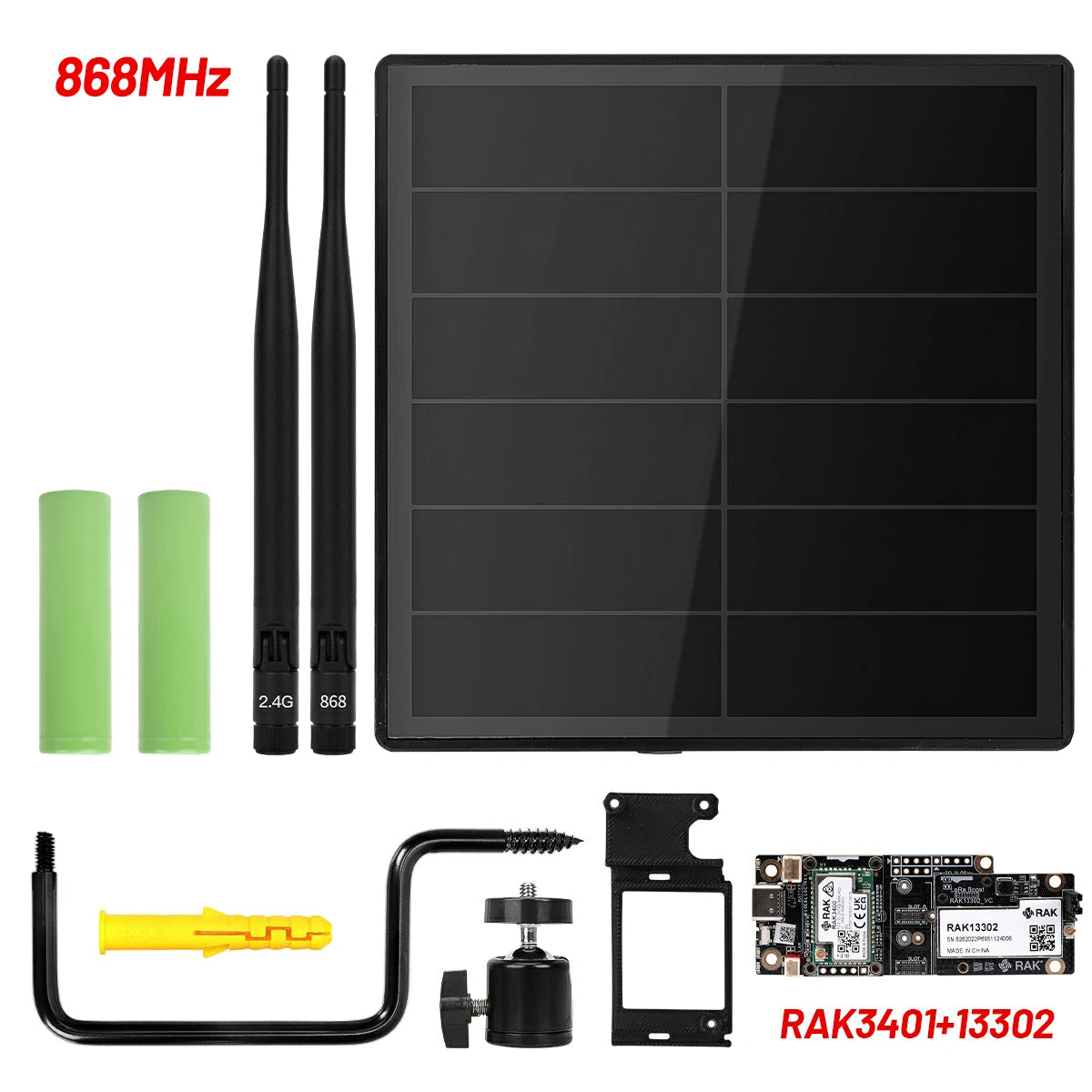
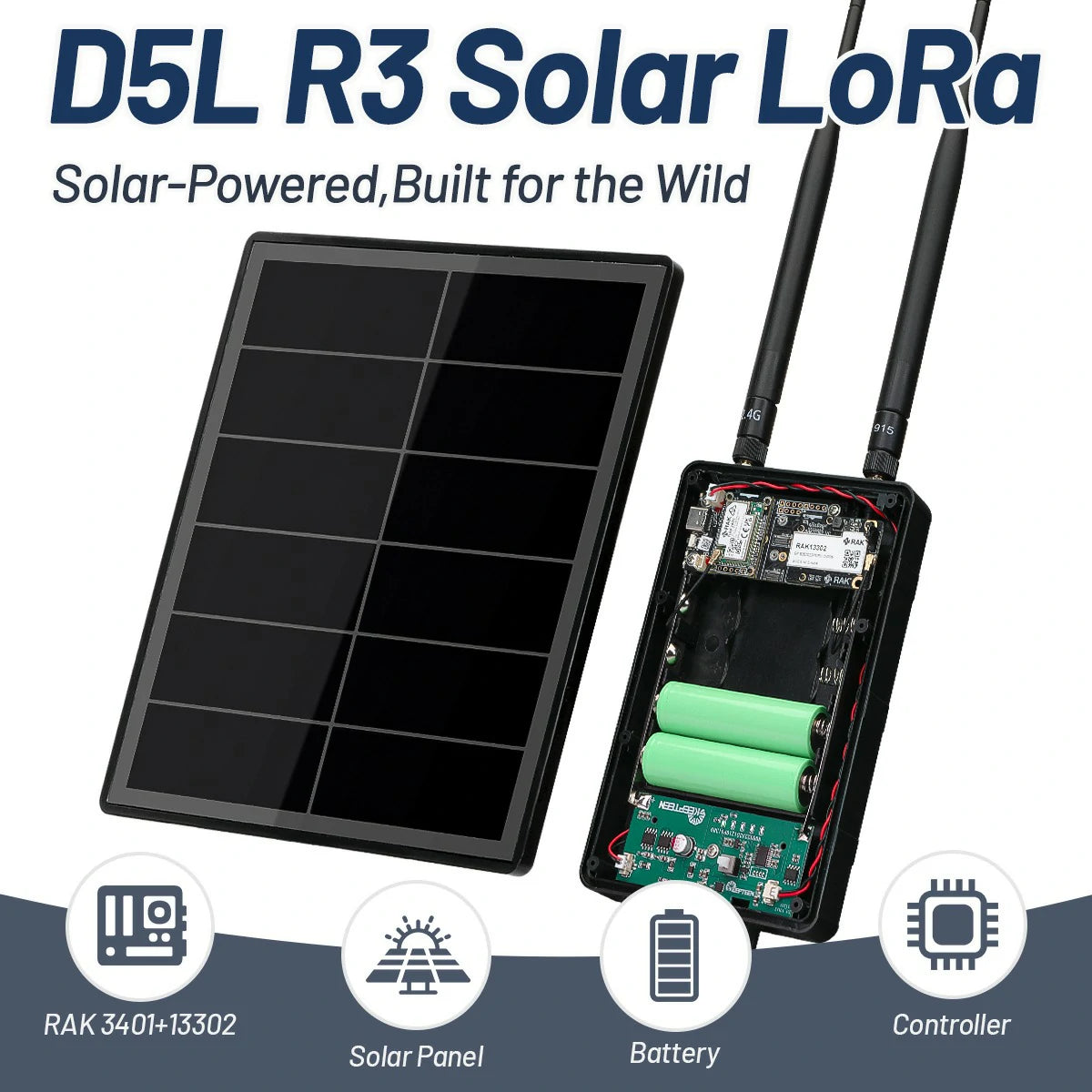
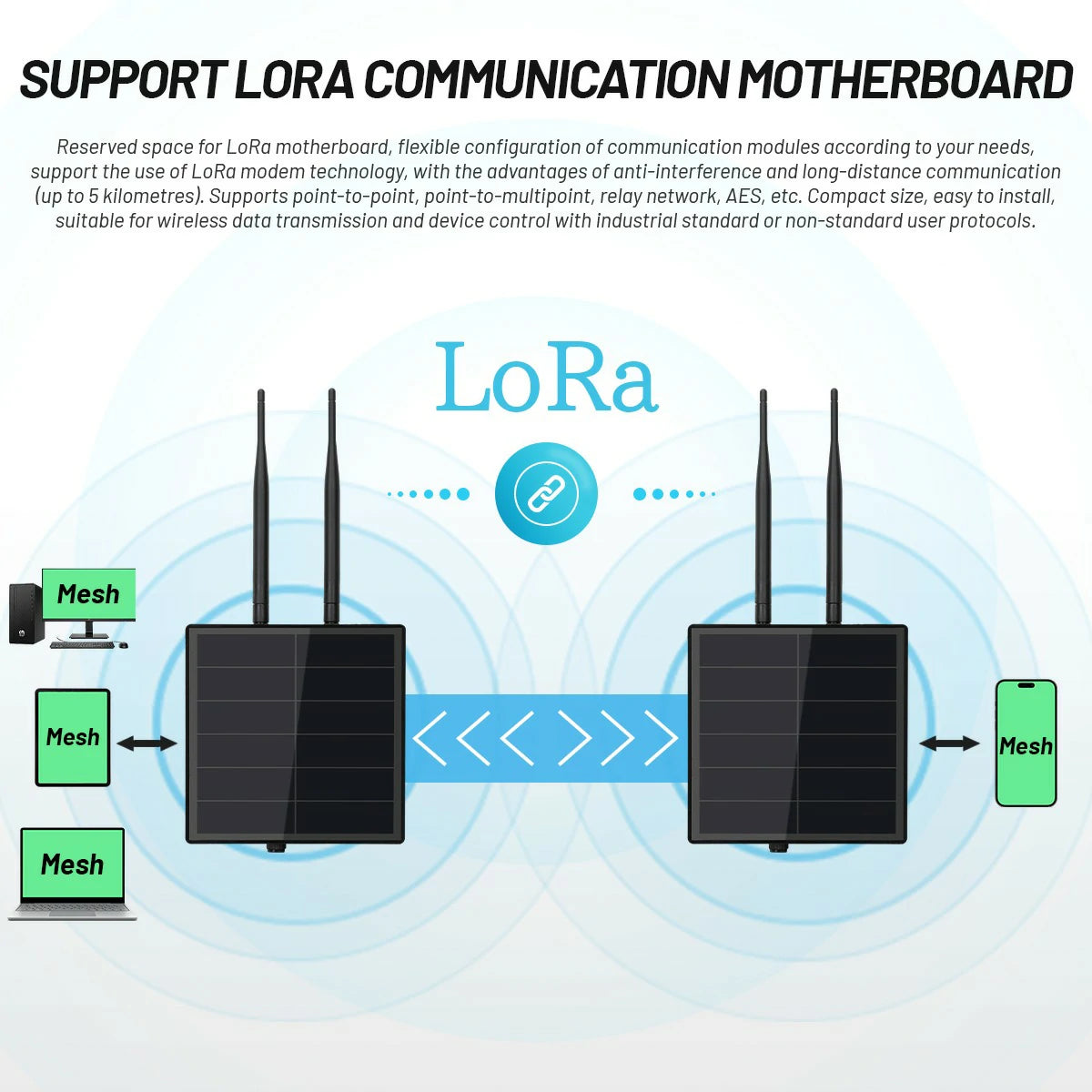
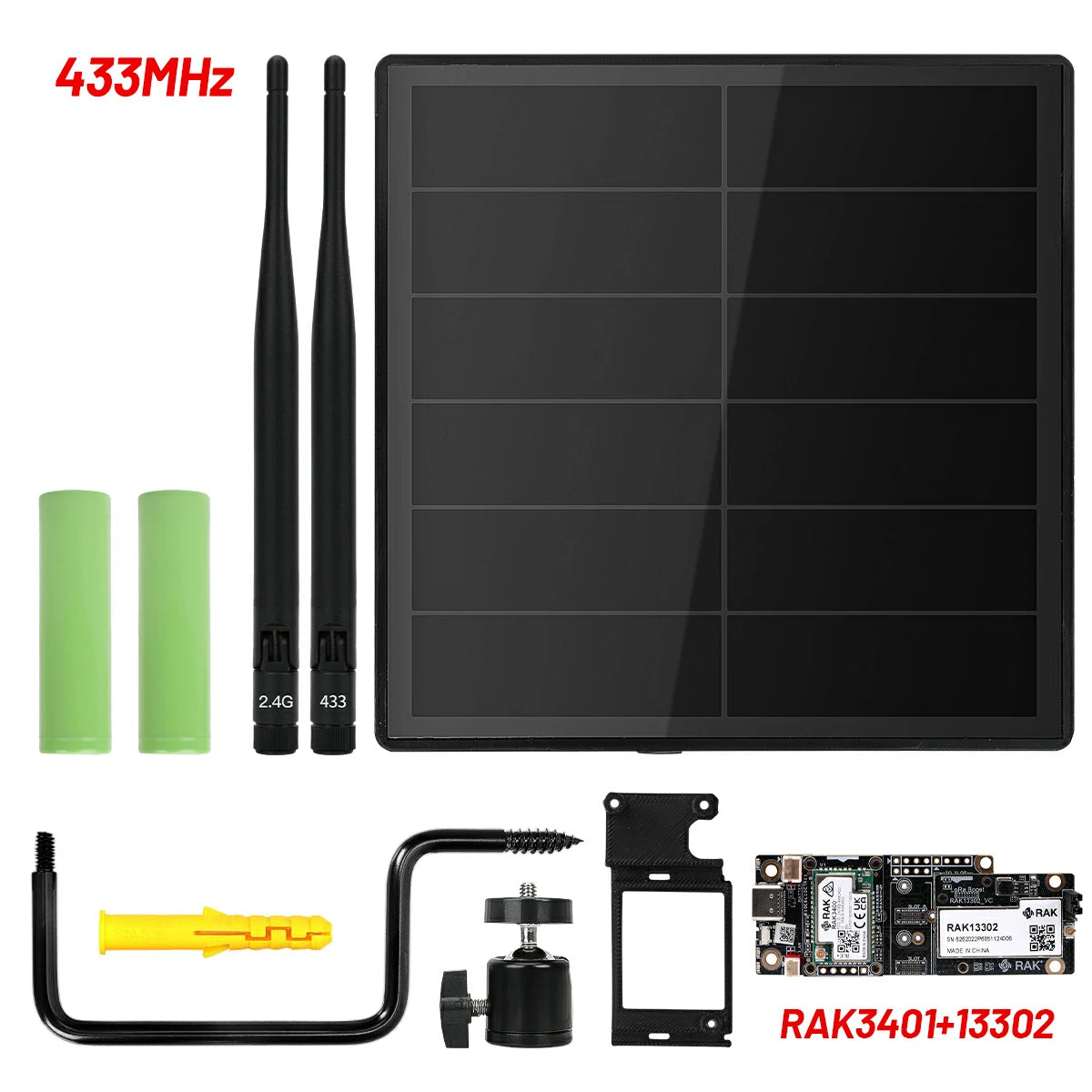
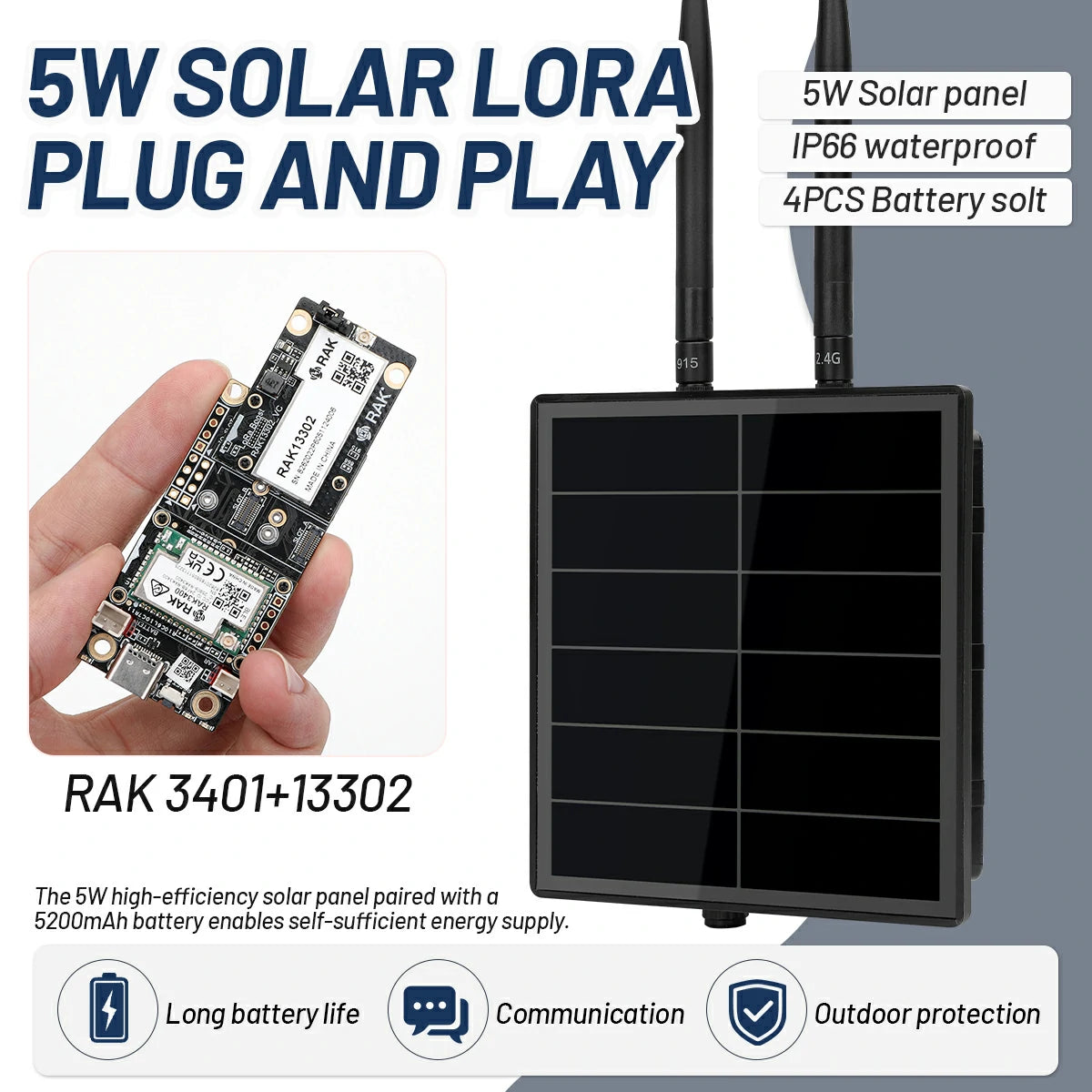
D5L-R3 is D5 Solar Panel Kits Built in with RAKWireless LoRa Modules.This modules combine with RAK19007 Base board+RAK3401 Core Processor+RAK13302 LoRA module(with Amplifier and filter).Compare with others high power Mesh LoRa module,but remove the GPS and Display.This resolution offer a ultra power consumption.In our real testing,the power consmption is about 7.63uA.it's perfect to using this modules board to assemble for Solar Mesh Repeater--low power consumption but stronger transmission distance.Great to built a Meshtastic or Meshcore Mesh in the City or Forest.
Support Firmware: Meshtastic&Meshcore
How Wismesh working?
1. nRF52840 MCU (Control + Bluetooth)
This component is the main control unit and Bluetooth communication.
2. SX1262 LoRa Transceiver(868MHz/915MHz)
This transceiver is responsible for LoRa (Long Range) communication. It connects to the MCU via SPI and transmits/receives data wirelessly.
3. LoRa Antenna (IPEX or SMA)
The antenna transmits the final amplified RF signal. It can be connected via either IPEX or SMA connectors.
Feature:
1)Wisblock RAK19007 Base develop Board
2)Wisblock RAK3401 Core module(nRF52840 MCU Bluetooth)
3)Newest Wisblock RAK13302 LoRa Module
4)SAW filter to remove noise and harmonics
5)7.63uA Ultra Low Power consumption
6)5W BC Solar Cell
7)Support Max 4pcs 18650 battery
8)IP66 Waterproof Case
Firmware Flasher:
Support Meshcore
Support Meshtastic
Specifiaction:
WisBlock RAK3401 Core module
Nordic nRF52840 MCU
ARM Cortex-M4F
1MB Flash and 348KB SRAM
I/O ports: UART/I2C/SPI/ADC/GPIO
WisBlock RAK13302 module
Semtech SX1262 LoRa transceiver
SKY66122 signal booster
Integrated RF filter for enhanced reception performance
IPEX antenna connector for LoRa
Support for 9xx MHz frequency band
RAK19007 WisBlock Base Board
4 sensor slots for WisBlock Sensor Modules
Supply voltage
5V over USB
5V over Solar Panel connector
Rechargeable battery
5.5W BC Solar Cell
IP66 Waterproof Case
Max 4pcs 18650 battery
1) High reliability anti-interference:
In industrial electromagnetic environments and scenarios where multiple wireless systems coexist (such as overlapping LPWANs in cities), high-power+spread spectrum technology can improve signal-to-noise ratio (SNR), resist signal fading caused by rain, fog, occlusion, etc., reduce packet loss rate, and ensure reliable transmission of critical data (such as industrial monitoring and smart grids).
2) Reduce deployment and maintenance costs:
Under the same coverage range, high-power modules can significantly reduce the number of gateways, especially in remote and outdoor areas, avoiding frequent station construction and maintenance and reducing long-term operating costs. For example, a 30dBm gateway can cover tens of square kilometers of farmland and the coverage area of multiple low-power gateways, reducing the use of low-power network nodes and saving network construction costs.